
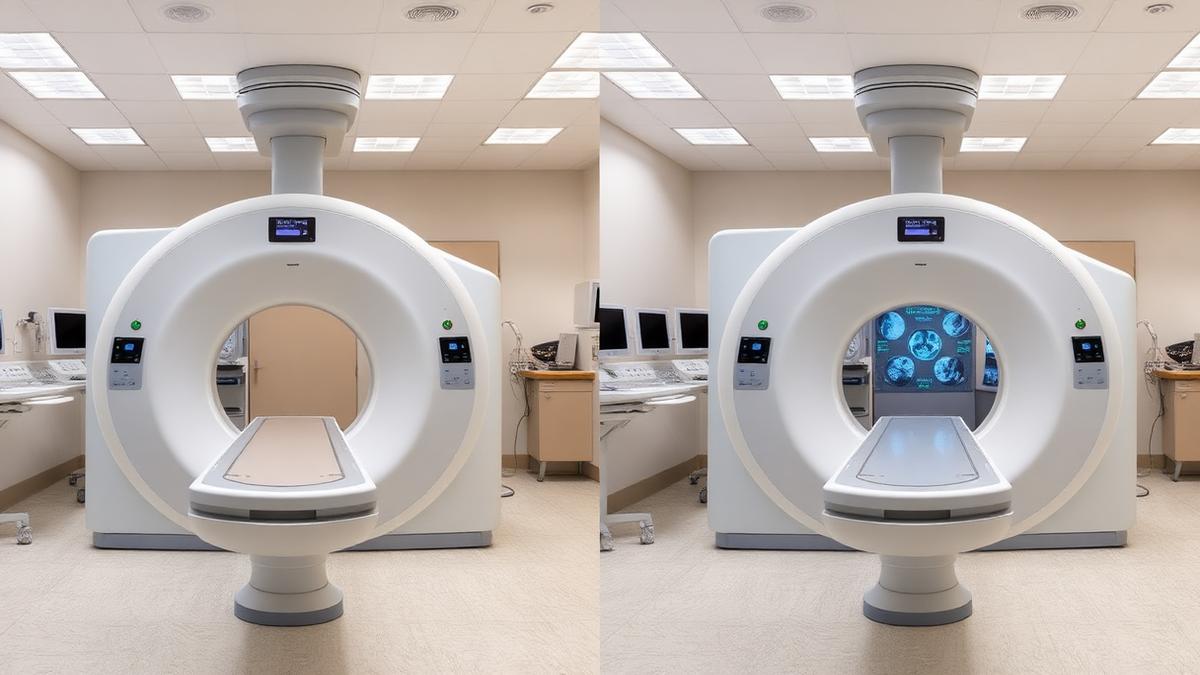
Refurbished and new MRI machines side by side in a quality-controlled facility
    ← Back to Blog|Equipment Guide

    Refurbished vs New MRI Machines — Complete Buying Guide

    March 19, 202616 min read

    Choosing between a refurbished and new MRI machine is one of the most consequential purchasing decisions a hospital can make. This comprehensive buying guide compares acquisition costs, total cost of ownership, clinical capabilities, warranty options, and long-term value to help you make the right choice.

    The MRI Purchase Decision: Stakes Are High

    An MRI machine is typically the most expensive single piece of equipment a hospital will purchase. New 1.5T MRI systems from major manufacturers cost $1.5–$3 million, while 3.0T systems can exceed $3–$5 million. For hospitals in developing markets across Africa, India, and the Caribbean, these prices represent years of capital budget.

    Refurbished MRI machines offer a compelling alternative: the same clinical diagnostic capability at 50–75% lower acquisition cost. A quality refurbished 1.5T MRI from Siemens, GE, or Philips typically costs $200,000–$500,000 — making advanced MRI diagnostics accessible to hospitals that could never afford a new system.

    But the decision isn't simply about upfront price. Total cost of ownership (TCO) — including installation, service, parts, helium, and operational costs over the system's remaining life — is the metric that determines true value. This guide examines both options across every dimension that matters.

    Acquisition Cost Comparison

    The cost difference between refurbished and new MRI systems is dramatic. Here's a typical 2026 comparison: Siemens Magnetom Aera 1.5T — New: $1.8–$2.5M, Refurbished: $250,000–$450,000. GE Signa HDxt 1.5T — New: $1.5–$2.2M, Refurbished: $200,000–$350,000. Philips Ingenia 1.5T — New: $2.0–$2.8M, Refurbished: $300,000–$500,000. Siemens Skyra 3.0T — New: $3.0–$4.5M, Refurbished: $500,000–$900,000.

    These savings of 60–85% free up capital for additional equipment, facility improvements, or operational reserves. For a hospital budget of $500,000, the choice may literally be between a refurbished MRI and no MRI at all.

    Clinical Capability: Is Refurbished Inferior?

    This is the most common misconception about refurbished MRI. A properly refurbished MRI system produces the same image quality as when it was originally manufactured. The physics of MRI — the superconducting magnet, gradient system, and RF coils — don't degrade if properly maintained.

    The clinical capabilities you get with a refurbished system depend on the original system's specifications: a refurbished Siemens Aera 1.5T provides the same sequences, resolution, and diagnostic quality as a new Siemens Aera. You may not have the latest software features available on a brand-new 2026 model, but the core diagnostic capability is equivalent.

    Where new systems offer genuine advantages: latest AI-powered reconstruction algorithms, helium-free or zero-boil-off magnet technology (reducing ongoing operational costs), faster scan times from hardware improvements, and workflow automation features. Whether these features justify 3–5x the acquisition cost depends on your clinical needs and patient volume.

    Total Cost of Ownership: The Complete Picture

    TCO analysis over 7 years reveals the true cost comparison. New MRI 1.5T: Acquisition $2.0M + Installation $200K + Service (7 years at $180K/yr OEM) $1.26M + Helium/Cryogens $140K = Total $3.6M. Refurbished MRI 1.5T: Acquisition $350K + Installation $150K + Service (7 years at $115K/yr third-party) $805K + Helium/Cryogens $140K = Total $1.445M.

    The TCO difference of approximately $2.15M over 7 years is striking. Even if the refurbished system has a shorter remaining life (say 10 years vs 15+ for new), the per-year cost is dramatically lower: $206K/year for refurbished vs $514K/year for new.

    This analysis doesn't account for the opportunity cost of capital — the $1.65M saved on acquisition can generate returns, fund additional equipment, or expand services. For hospitals in developing markets where capital is extremely scarce, this multiplier effect is transformative.

    Quality Standards: What Makes a Reliable Refurbished MRI

    Not all refurbished MRI systems are equal. The quality of the refurbishment process is the single most important factor in determining whether a used MRI will deliver reliable performance. The International Electrotechnical Commission (IEC) and FDA provide frameworks for equipment refurbishment quality.

    A quality refurbishment should include: complete magnet assessment (field homogeneity, ramp rate, helium integrity), gradient system testing and component refresh, RF coil testing and replacement where needed, all cables and connections inspected and replaced as necessary, software updated to latest available version, full cosmetic restoration, electrical safety and isolation testing, and clinical image quality verification against OEM specifications.

    Elesonic Group maintains CE certification and ISO 13485 quality management for all refurbished MRI systems, ensuring each unit meets the same standards required for new equipment manufacturing. Every system ships with complete refurbishment documentation and warranty coverage.

    Installation Considerations for Developing Markets

    MRI installation requirements are identical for new and refurbished systems: an RF-shielded room (Faraday cage), sufficient structural support for the magnet weight (typically 4–8 tons for a 1.5T system), adequate electrical supply (often requiring dedicated transformers), HVAC systems capable of handling heat generated by the gradient system, and a helium venting system for safety.

    For hospitals in Africa, India, and the Caribbean, additional considerations include: power conditioning to protect against voltage fluctuations, enhanced cooling capacity for tropical climates, logistics planning for magnet delivery (which may require specialized transport and rigging), and customs and regulatory compliance.

    Elesonic provides complete installation services for both new and refurbished MRI systems, including site planning, RF cage construction, magnet delivery, installation, ramp-up, shimming, and clinical commissioning. Our experience navigating developing market logistics and regulatory requirements is a significant advantage.

    Decision Framework: When to Buy New vs Refurbished

    Buy New When: Your budget comfortably supports the full acquisition and TCO, you need the absolute latest technology features (AI reconstruction, helium-free design), you're in a highly competitive market where marketing the latest equipment matters, or you expect very high patient volume (2000+ scans/year) where the newest technology's speed advantages have significant throughput impact.

    Buy Refurbished When: Budget is the primary constraint and you need MRI capability at the lowest possible cost, you're establishing MRI capability for the first time in a developing market facility, your clinical needs are well served by 1.5T systems from the last 5–10 years, you want to maximize the number of imaging modalities within a fixed budget (e.g., MRI + CT rather than just a new MRI), or you're a private clinic where ROI on a new system would take too long to achieve.

    For the majority of hospitals in Africa, India, and the Caribbean, refurbished MRI represents the optimal choice — delivering essential diagnostic capability at a price that makes clinical and financial sense. The key is choosing a quality provider like Elesonic that ensures proper refurbishment, installation, and ongoing service support.

    Frequently Asked Questions

    Is a refurbished MRI machine as good as a new one?

    A properly refurbished MRI produces the same image quality as when originally manufactured. The superconducting magnet and core imaging physics don't degrade with proper maintenance. You may not have the absolute latest software features, but diagnostic capability is equivalent. The key is choosing a CE-certified provider like Elesonic.

    How much does a refurbished MRI cost?

    Refurbished 1.5T MRI systems cost $200,000–$500,000 depending on manufacturer, model, and configuration. Refurbished 3.0T systems cost $500,000–$900,000. This represents 50–85% savings versus new MRI systems from the same manufacturers.

    How much does a new MRI machine cost in 2026?

    New 1.5T MRI systems cost $1.5–$3.0M. New 3.0T systems cost $3.0–$5.0M. These prices include the system but may not include installation, which adds $150,000–$300,000 for site construction, RF shielding, and commissioning.

    How long does a refurbished MRI last?

    A quality refurbished MRI can provide 8–15+ years of additional service life. The superconducting magnet has no inherent lifespan limit. The key factors are: quality of refurbishment, ongoing preventive maintenance, and environment (power stability, climate control). Elesonic provides long-term service support for all refurbished MRI installations.

    What warranty comes with a refurbished MRI?

    Quality refurbished MRI systems should include at least 6–12 months of comprehensive warranty covering parts and labor. Elesonic provides warranties on all refurbished systems with options for extended coverage through ongoing service contracts.

    Can I get a refurbished MRI installed in Africa?

    Yes. Elesonic specializes in MRI installations across Africa including site planning, RF cage construction, magnet delivery logistics, installation, and clinical commissioning. We have completed installations in Nigeria, Kenya, Uganda, and other African countries.

    What is the total cost of owning an MRI machine?

    Total cost of ownership over 7 years: New 1.5T MRI — approximately $3.6M (acquisition + installation + service + helium). Refurbished 1.5T MRI — approximately $1.45M. This includes acquisition, installation, annual service contracts, helium/cryogen costs, and typical maintenance expenses.

    Which MRI brands are available refurbished?

    All major MRI brands are available refurbished: Siemens Magnetom (Avanto, Aera, Skyra, Espree, Vida), GE Signa (HDxt, Explorer, Artist), Philips (Achieva, Ingenia, Intera), and Toshiba/Canon (Vantage). Elesonic sources and refurbishes systems from all manufacturers.

    What is the difference between used and refurbished MRI?

    'Used' simply means previously owned — it may not have been inspected or repaired. 'Refurbished' means the system has undergone a comprehensive inspection, component replacement, testing, and quality verification process. Always buy refurbished from a CE-certified provider, never simply 'used' without refurbishment documentation.

    Do refurbished MRI machines need special installation?

    Refurbished MRI machines have identical installation requirements to new systems: RF-shielded room, structural reinforcement for magnet weight, dedicated power supply, HVAC, and helium venting. There is no difference in installation complexity or requirements between new and refurbished MRI.

    How do I choose between 1.5T and 3.0T refurbished MRI?

    1.5T is sufficient for most clinical applications and is the workhorse of diagnostic MRI. Choose 3.0T if you need: advanced neuroimaging, cardiac MRI, research applications, or spectroscopy. For developing market hospitals, 1.5T refurbished offers the best value proposition — 90%+ of clinical diagnostic MRI can be performed effectively at 1.5T.

    Can I finance a refurbished MRI purchase?

    Yes. Many refurbished MRI providers, including Elesonic, offer financing options or can work with medical equipment leasing companies. The lower acquisition cost of refurbished MRI makes financing more accessible and monthly payments more manageable for developing market hospitals.

    What site preparation is needed for MRI installation?

    MRI site preparation includes: RF-shielded room (Faraday cage) construction, floor reinforcement for magnet weight (4–8 tons), dedicated electrical supply with voltage regulation, HVAC system for heat dissipation, helium quench pipe installation, and control room setup. Elesonic provides complete site planning guidance.

    How is a refurbished MRI shipped internationally?

    Refurbished MRI shipping requires specialized logistics: the magnet must remain cold (cryogenic transport), components are crated separately, customs clearance for medical devices must be arranged, and local rigging teams are needed for placement. Elesonic handles all international MRI shipping logistics including customs and delivery to site.

    What ongoing costs should I budget for MRI?

    Annual MRI operating costs include: service contract ($90,000–$180,000/year), helium top-ups ($15,000–$30,000/fill, typically 1–2 per year), electricity ($30,000–$60,000/year), RF coil replacement ($5,000–$40,000 per coil as needed), and consumables. Third-party service from Elesonic significantly reduces the service contract component.

    Is helium-free MRI available refurbished?

    Helium-free (sealed magnet) MRI systems are relatively new technology and are rarely available refurbished yet. Current refurbished MRI systems use liquid helium cooling. However, modern zero-boil-off technology significantly reduces helium consumption, and Elesonic monitors helium levels as part of preventive maintenance contracts.

    How does Elesonic refurbish MRI machines?

    Elesonic's MRI refurbishment process includes: complete magnet assessment and testing, gradient system inspection and component refresh, RF coil testing and replacement, all cabling and connections inspection, software update to latest available version, full cosmetic restoration, electrical safety testing, and clinical image quality verification against OEM specifications. All work is performed under CE and ISO 13485 quality management.

    Can a refurbished MRI be upgraded later?

    Some upgrades are possible on refurbished MRI: adding RF coils, upgrading workstations, and in some cases software updates. Major hardware upgrades (changing gradient strength, magnet field strength) are generally not feasible. Choose a refurbished system with the core capabilities you need from the start.

    What ROI can I expect from a refurbished MRI?

    ROI on refurbished MRI is typically 2–4x faster than new. With acquisition cost of $350K, installation of $150K, and revenue of $200–$500 per scan at 1500+ scans/year, a refurbished MRI can break even within 2–3 years. A new MRI at $2M+ may take 6–10 years to achieve the same ROI.

    Should I buy refurbished MRI for a new hospital?

    For new hospitals in developing markets, refurbished MRI is typically the optimal choice. It allows you to offer MRI diagnostics from day one while preserving capital for other essential equipment and infrastructure. As your hospital grows and generates revenue, you can plan for new equipment upgrades based on clinical demand and financial performance.

    Ready to Reduce Your Service Costs?

    Get a customized service proposal for your imaging equipment — MRI, CT, cath lab, X-ray, or C-arm.