
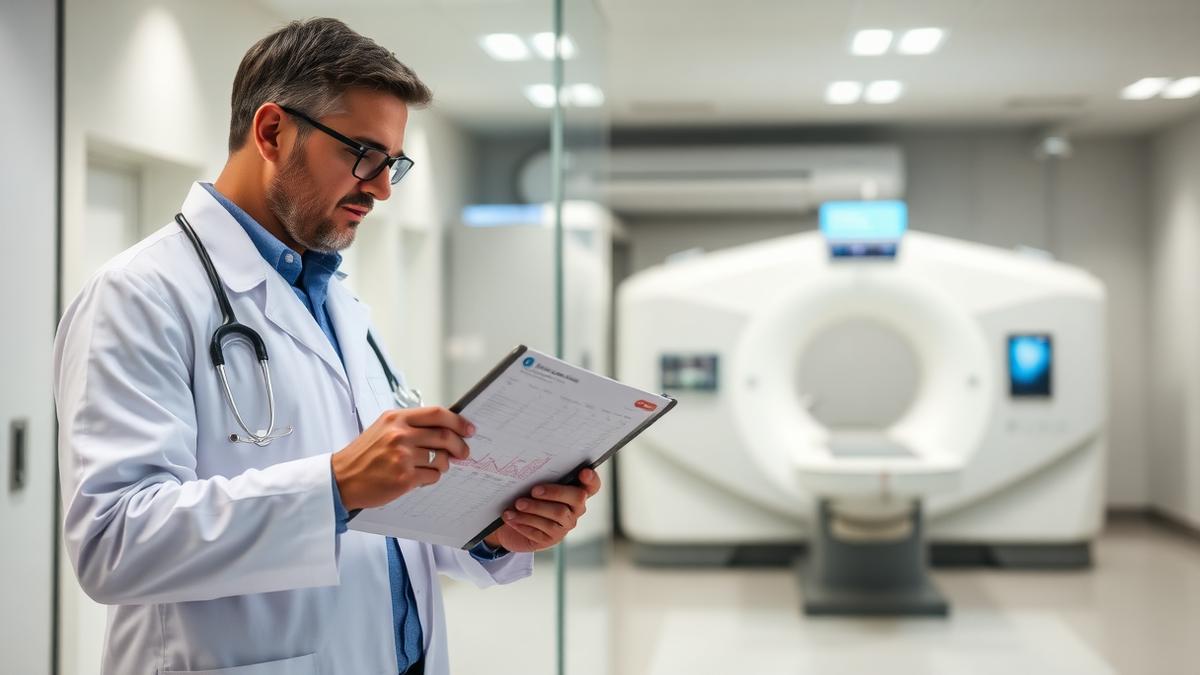
Medical imaging equipment represents one of the largest capital and operational expenditures for hospitals. This guide presents proven strategies that can reduce total imaging costs by up to 40% — covering procurement, service contracts, refurbished equipment, operational efficiency, and vendor negotiation.
The True Cost of Medical Imaging Equipment
Medical imaging equipment costs extend far beyond the purchase price. For a typical mid-size hospital operating MRI, CT, cath lab, and X-ray systems, the total annual cost of imaging operations can exceed $1.5 million — combining equipment depreciation, service contracts, parts, consumables, staffing, and facility costs.
According to the Radiological Society of North America (RSNA), equipment maintenance and service represent 30–40% of total imaging department costs. This is where the greatest savings opportunities exist, particularly for hospitals in developing markets where OEM service pricing doesn't reflect local economic realities.
The good news: hospitals that systematically apply the strategies in this guide have achieved 30–45% total cost reductions without compromising diagnostic quality, equipment uptime, or patient safety. The key is a holistic approach that addresses every cost component.
Strategy 1: Switch to Third-Party Service (Save 30–40%)
The single most impactful cost-reduction strategy is transitioning from OEM to qualified third-party service. OEM service contracts from Siemens, GE, and Philips carry substantial premium pricing that reflects their global cost structures, brand positioning, and shareholder return requirements.
Third-party providers like Elesonic Group deliver equivalent service quality at 30–40% lower cost by leveraging: competitive labor markets (India-based engineering), refurbished component strategies, lower overhead structures, and pricing designed for developing market economics. For a hospital paying $560,000/year in OEM contracts across MRI, CT, and cath lab, switching to qualified third-party service could save $170,000–$225,000 annually.
The key qualifier is 'qualified' — ensure any third-party provider maintains CE certification, ISO 13485 quality management, factory-trained engineers, and documented references in your region. Elesonic meets all of these criteria with proven service operations across Africa, India, and the Caribbean.
Strategy 2: Buy Refurbished Equipment (Save 50–75%)
For equipment acquisitions, refurbished systems offer dramatic savings: MRI 1.5T — save $1.0–$2.5M per system. CT 64-slice — save $300K–$800K. Cath Lab — save $500K–$2M. X-ray DR — save $40K–$100K.
Quality refurbished equipment from CE-certified providers like Elesonic delivers the same clinical diagnostic capability as new systems. The refurbishment process includes complete inspection, component replacement, testing, and certification — ensuring the system meets original manufacturer specifications.
For hospitals in developing markets, the math is clear: a $350,000 refurbished MRI that generates $200+ per scan at 1500 scans/year achieves ROI in under 2 years. A $2M new MRI performing the same volume takes 7+ years. Refurbished equipment enables faster ROI and frees capital for additional modalities or facility expansion.
Strategy 3: Bundle Service Contracts (Save 10–20%)
Hospitals operating multiple imaging modalities can achieve additional savings by bundling service contracts with a single multi-vendor provider. Instead of separate contracts with Siemens (for MRI), GE (for CT), and Philips (for cath lab), a single contract with a multi-vendor provider like Elesonic covers all systems.
Benefits include: volume discounts (10–20% additional savings), simplified vendor management (one contract, one point of contact), coordinated maintenance scheduling (reducing total visit days), and consolidated billing and reporting.
The prerequisite is a provider with genuine multi-vendor expertise. Elesonic's engineering team maintains training and experience across all major manufacturers — Siemens, GE, Philips, Toshiba/Canon — enabling seamless multi-vendor service delivery.
Strategy 4: Implement Preventive Maintenance Programs
Reactive maintenance (waiting for equipment to fail) costs 3–5x more than proactive preventive maintenance. Every dollar invested in PM saves $3–$5 in emergency repairs, unplanned downtime, and expedited parts shipping.
An effective PM program includes: quarterly scheduled maintenance visits for all major modalities, monthly remote monitoring of critical parameters (MRI cryogen levels, CT tube life, cath lab FPD status), daily operational checks by trained hospital staff, and proactive component replacement based on usage data rather than waiting for failure.
Elesonic's service contracts include comprehensive PM programs with 24-hour remote monitoring, quarterly on-site visits, and proactive component management — designed to maximize uptime and minimize total service costs over the equipment lifecycle.
Strategy 5: Optimize Operational Efficiency
Beyond procurement and maintenance, operational optimization reduces imaging costs: protocol optimization — standardizing scan protocols reduces scan times, radiation dose (for CT), and equipment wear. Scheduling efficiency — maximizing equipment utilization reduces per-scan facility and staffing costs. Staff training — well-trained operators reduce repeat scans, equipment misuse, and unnecessary service calls.
Technology upgrades can also drive efficiency: upgrading analog X-ray to DR (digital radiography) at $25,000–$50,000 for a retrofit eliminates film costs, reduces radiation dose, speeds workflow, and enables digital PACS integration. The ROI on DR retrofit is typically under 2 years from film cost savings alone.
Implementation Roadmap: 12-Month Cost Reduction Plan
Month 1–3: Audit current imaging costs (equipment, service, parts, consumables, staffing). Identify which contracts are approaching renewal. Get competitive proposals from third-party providers for all expiring contracts. Month 4–6: Transition expiring OEM contracts to qualified third-party providers. Implement preventive maintenance programs for all modalities. Begin operational efficiency improvements (protocol optimization, scheduling).
Month 7–9: Evaluate equipment replacement or expansion needs. Source refurbished options for any planned acquisitions. Negotiate multi-year, multi-modality bundled contracts. Month 10–12: Review and quantify savings achieved. Adjust strategies based on results. Plan next year's imaging budget with optimized cost structure.
Hospitals that follow this roadmap consistently achieve 30–45% total imaging cost reductions within the first 12–18 months. Elesonic provides consultation support for hospitals implementing cost reduction strategies across their imaging departments.