
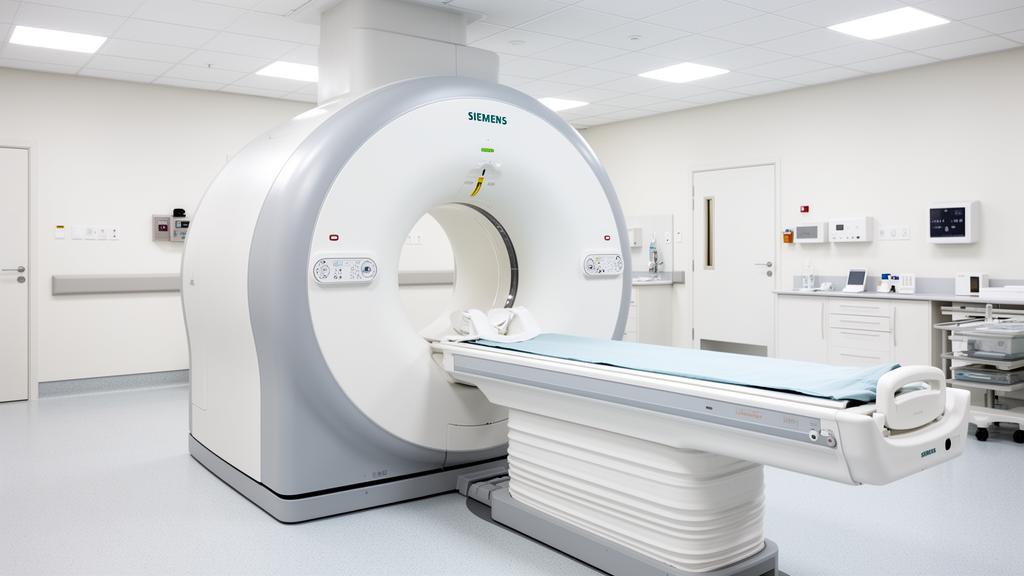
MRI maintenance is one of the largest recurring costs in medical imaging. This guide breaks down OEM vs third-party pricing, key cost drivers, and strategies to reduce your MRI service budget by up to 40%.
The True Cost of MRI Maintenance
MRI machine maintenance is consistently one of the top three budget line items for radiology departments worldwide. For hospitals in developing markets — across Africa, India, and the Caribbean — these costs can represent a significant portion of the entire imaging department budget.
In 2026, OEM MRI service contracts from Siemens Healthineers, GE HealthCare, and Philips typically range from $150,000 to $300,000 per year for 1.5T systems, with 3.0T systems commanding premiums of $200,000 to $350,000 per year. These figures often don't include major component failures like cold head replacements or helium fills.
OEM vs Third-Party MRI Service: A Cost Comparison
The most significant cost-reduction strategy available to hospitals today is transitioning from OEM to qualified third-party MRI service. Companies like Elesonic Group offer comprehensive MRI maintenance at 30–40% below OEM pricing while maintaining equivalent quality standards.
A typical 1.5T Siemens Magnetom Aera with OEM service might cost $180,000/year. The same coverage from a qualified third-party provider could cost $110,000–$130,000/year — saving $50,000–$70,000 annually without compromising on service quality, response times, or parts quality.
For 3.0T systems like the Philips Ingenia or Siemens Skyra, the savings are even more dramatic: OEM contracts at $250,000–$300,000/year versus third-party options at $160,000–$200,000/year.
Key MRI Cost Drivers You Should Monitor
Understanding what drives MRI maintenance costs helps you negotiate better contracts and anticipate budget needs. The five biggest cost drivers are: (1) Helium and cryogenic system maintenance — a single helium fill costs $15,000–$30,000, and cold head replacement runs $40,000–$80,000. (2) Gradient system components — gradient amplifier failures can cost $30,000–$80,000 to repair or replace. (3) RF coil maintenance — individual coils cost $5,000–$40,000 to replace, and a full coil suite can exceed $200,000. (4) Software licensing — annual software fees add $10,000–$25,000 to total costs. (5) Emergency service calls — unplanned visits at $2,000–$5,000 each add up quickly without proper PM programs.
MRI Service Cost in Africa and Developing Markets
Hospitals in Africa face unique MRI service challenges: limited local engineering talent, expensive parts logistics, and OEM pricing that doesn't account for local economic realities. OEM MRI service contracts in Nigeria, Kenya, or Uganda often cost the same or more than in developed markets — despite dramatically different revenue environments.
Elesonic Group addresses this gap with India-based engineering support (reducing labor costs by 40–60%), strategic parts warehousing in target regions, and service models designed for developing market economics. Our Africa-specific MRI service contracts start at $100,000/year for 1.5T systems — making reliable MRI uptime accessible to more hospitals.
5 Strategies to Reduce Your MRI Service Costs
1. Switch to a qualified third-party provider: This single change can save 30–40% annually. Ensure the provider has documented MRI experience, proper certifications (CE, ISO 13485), and a track record in your region.
2. Invest in preventive maintenance: Every dollar spent on PM saves $3–$5 in emergency repairs. Regular cryogen monitoring, coil testing, and calibration prevent costly unplanned downtime.
3. Consider component repair over replacement: Many MRI components (RF coils, cold heads, gradient amplifiers) can be refurbished at 40–60% of replacement cost. Elesonic's in-house repair capabilities make this practical.
4. Negotiate multi-year contracts: Committing to 2–3 year service agreements often secures 10–15% additional discounts from both OEM and third-party providers.
5. Bundle modalities: If you have multiple imaging systems (MRI + CT + X-ray), bundling service contracts with a single multi-vendor provider like Elesonic creates volume discounts and operational simplicity.