
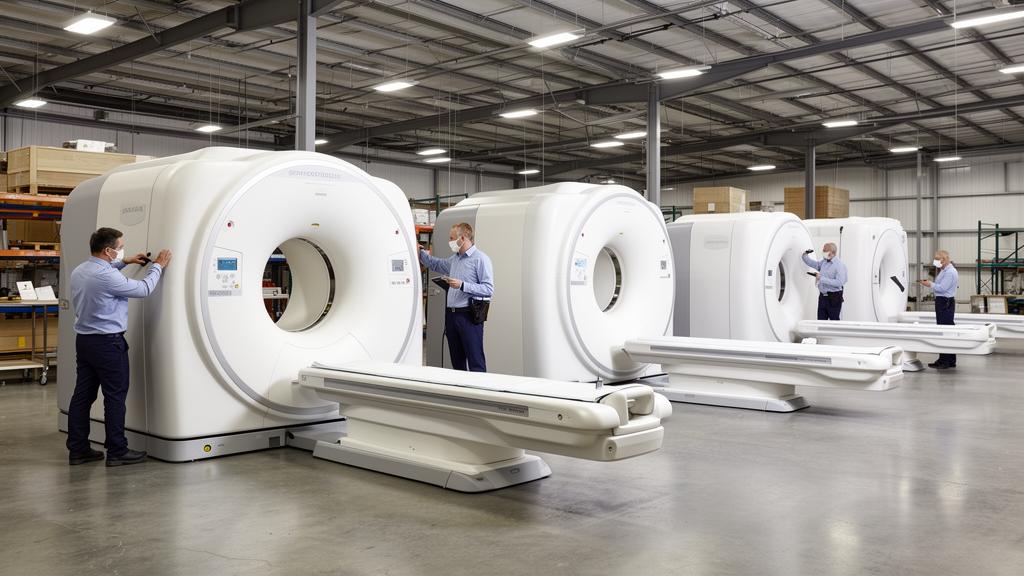
Refurbished medical imaging equipment can save 40–60% vs new systems while delivering clinical-grade performance. This guide covers quality standards, cost comparisons, and what to look for when buying refurbished MRI, CT, cath lab, and X-ray equipment.
Why Refurbished Medical Imaging Equipment?
The global refurbished medical imaging equipment market is projected to reach $15 billion by 2028, driven by healthcare systems worldwide seeking to expand diagnostic capabilities without the prohibitive cost of new systems.
For hospitals in developing markets — across Africa, India, and the Caribbean — refurbished imaging equipment often represents the only realistic path to offering advanced diagnostic modalities like MRI and CT. A quality refurbished 1.5T MRI system at $200,000–$400,000 is dramatically more accessible than a new system at $1.5–$3 million.
But not all refurbished equipment is created equal. Understanding quality standards, refurbishment processes, and what to look for is essential to making a sound investment.
Cost Savings: Refurbished vs New Equipment
The primary advantage of refurbished equipment is cost. Typical savings by modality: MRI 1.5T — New: $1.5–$3M vs Refurbished: $200,000–$500,000 (60–85% savings). CT 64-slice — New: $500,000–$1.2M vs Refurbished: $150,000–$400,000 (50–70% savings). Cath Lab — New: $1–$3M vs Refurbished: $250,000–$800,000 (50–75% savings). X-Ray DR — New: $60,000–$150,000 vs Refurbished: $20,000–$60,000 (50–70% savings).
These savings don't mean compromised quality. A properly refurbished system from a reputable provider delivers the same clinical performance as the original system, with refreshed components and updated software where available.
What Makes a Quality Refurbishment?
The refurbishment process should include: (1) Complete system inspection and testing before refurbishment begins. (2) Replacement of all worn components — tubes, detectors, cables, covers. (3) Software updates to the latest available version. (4) Cosmetic restoration — new paint, panels, and covers. (5) Full electrical and safety testing. (6) Clinical image quality verification against OEM specifications. (7) Installation by qualified engineers with clinical application training.
Look for providers with CE certification and ISO 13485 quality management systems — this ensures the refurbishment process meets medical device quality standards. Elesonic Group maintains both certifications for all refurbished equipment.
Buying Refurbished Equipment for Africa and the Caribbean
Purchasing refurbished imaging equipment for developing markets requires additional considerations: (1) Ensure the system is compatible with local power supply (voltage, frequency, stability). (2) Verify that service and parts support is available in your country. (3) Confirm the system meets local regulatory requirements. (4) Plan for installation logistics including shipping, customs, site preparation, and rigging. (5) Ensure clinical training is included for your radiography and medical teams.
Elesonic Group specializes in supplying refurbished imaging equipment to Africa and the Caribbean, with end-to-end support from system selection through installation, training, and ongoing service. Our experience navigating the logistics and regulatory requirements of these markets is a significant advantage for buyers.
Red Flags When Buying Refurbished Equipment
Avoid these common pitfalls: (1) No clear refurbishment documentation — if the seller can't detail what was inspected, repaired, and replaced, walk away. (2) No warranty — quality refurbished equipment should come with at least a 6–12 month warranty. (3) Unknown provenance — the system's history (original installation country, usage volume, reason for decommission) should be transparently disclosed. (4) No service support — buying refurbished equipment without a service plan is risky. (5) Pricing that's too good to be true — extremely cheap equipment often has hidden problems.