
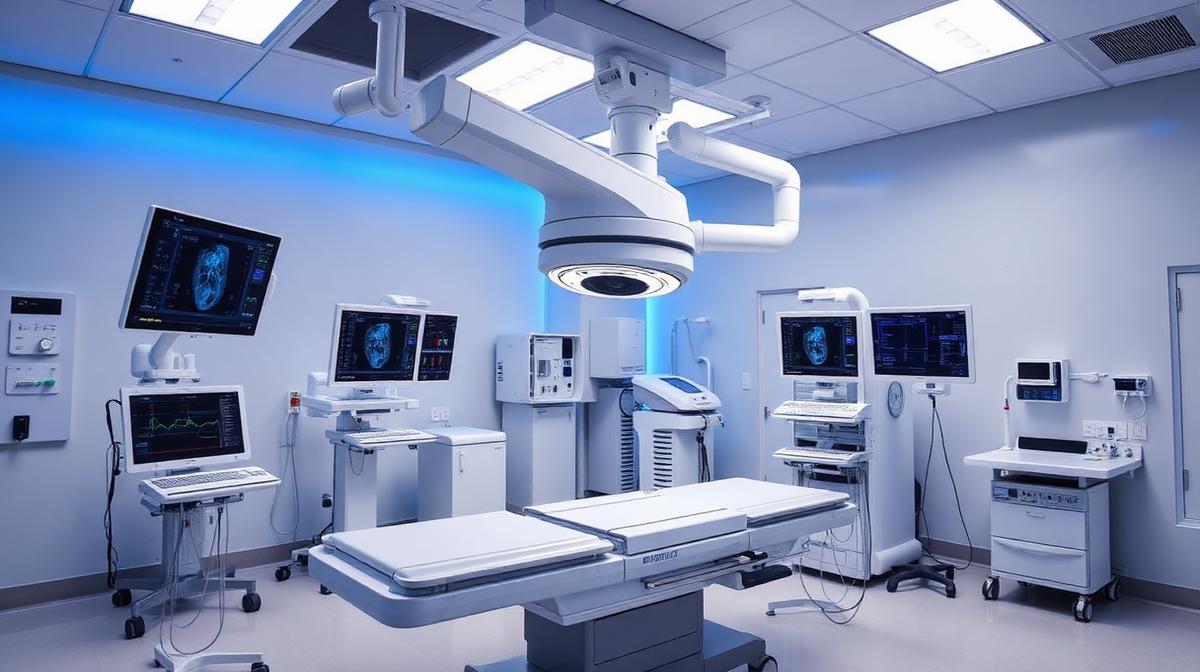
Refurbished medical equipment is revolutionizing healthcare access globally. This comprehensive guide covers everything hospitals need to know about buying refurbished MRI machines, refurbished CT scan machines, refurbished cath labs, and refurbished C-arm systems — including cost comparisons, quality standards, brand options, and how to choose the right refurbished medical equipment for your facility.
What Is Refurbished Medical Equipment and Why Does It Matter?
Refurbished medical equipment refers to pre-owned medical devices that have been professionally restored to original manufacturer specifications by certified refurbishment facilities. The refurbished medical equipment market has grown into a multi-billion dollar industry, driven by hospitals worldwide seeking quality diagnostic imaging at accessible prices.
According to the World Health Organization (WHO), over 70% of medical equipment in developing countries is donated or second-hand, yet only a fraction has been properly refurbished. Quality refurbished medical equipment from CE-certified providers like Elesonic Group bridges this gap — delivering MRI machines, CT scanners, cath labs, and C-arm systems that perform identically to when originally manufactured, at 40–85% lower cost.
The refurbished medical equipment market serves a critical function: it extends the useful life of sophisticated imaging technology by 7–15 years, reduces electronic medical waste, and most importantly, makes advanced diagnostics accessible to hospitals that cannot afford new systems. This guide covers the four most important categories of refurbished medical equipment: refurbished MRI machines, refurbished CT scan machines, refurbished cath lab systems, and refurbished C-arm fluoroscopy.
Refurbished MRI Machine — Complete Buying Guide
A refurbished MRI machine represents the single largest potential savings in medical imaging equipment. New MRI systems cost $1.5–$5 million; a quality refurbished MRI machine costs $200,000–$900,000 — a savings of 50–85% with equivalent diagnostic capability.
When evaluating a refurbished MRI machine, the critical factors are: magnet homogeneity (the superconducting magnet should show field uniformity within OEM specifications), gradient system performance (key for image quality and advanced sequences), RF coil condition (coils degrade over time and may need replacement), cryogenic system health (helium levels and cold head performance), and software version (should be updated to latest compatible version).
Popular refurbished MRI models include: Siemens Magnetom Avanto (excellent 1.5T workhorse), Siemens Magnetom Aera (newer 1.5T with wider bore), GE Signa HDxt (versatile 1.5T platform), Philips Achieva (strong 1.5T with excellent imaging), and Siemens Magnetom Skyra (premium 3.0T for advanced applications). Elesonic Group supplies refurbished MRI machines from all these manufacturers with CE certification and 6–12 month warranty.
The refurbished MRI installation process requires careful planning: RF-shielded room (Faraday cage), floor reinforcement for 4–8 ton magnet weight, dedicated electrical supply, HVAC system for heat management, and helium quench pipe installation. Elesonic provides complete site planning and installation services for refurbished MRI machine deployments across Africa, India, and the Caribbean.
ROI on a refurbished MRI machine is compelling: at $350,000 acquisition cost with $200–$500/scan revenue and 1,500+ scans/year, hospitals achieve full ROI in 2–3 years. Compare this to 6–10 years for a new $2M+ MRI system. Combined with third-party service from Elesonic at 30–40% below OEM pricing, refurbished MRI delivers the best value proposition in medical imaging.
Refurbished CT Scan Machine — Cost, Features & Selection
A refurbished CT scan machine is the most versatile diagnostic imaging investment a hospital can make. CT scanning is essential for emergency medicine, oncology staging, cardiac imaging, trauma assessment, and routine diagnostics. A quality refurbished CT scan machine delivers all these capabilities at 50–70% below new pricing.
Refurbished CT scan machine pricing by slice count: 16-slice refurbished CT scan — $80,000–$180,000 (vs $200K–$500K new), 64-slice refurbished CT scan — $150,000–$400,000 (vs $500K–$1.2M new), 128-slice refurbished CT scan — $300,000–$700,000 (vs $800K–$2M new). For most hospitals in developing markets, a 64-slice refurbished CT scan machine offers the optimal balance of clinical capability and cost.
Key evaluation criteria for a refurbished CT scan machine: X-ray tube condition (remaining tube life is critical — ask for documented scan counts), detector array health (detector sensitivity impacts image quality), gantry mechanical condition (rotation speed, vibration levels), software version (dose management features are essential), and workstation capabilities.
Top refurbished CT scan machine models: Siemens Somatom Emotion (reliable 16-slice), Siemens Somatom Definition (excellent 64/128-slice), GE BrightSpeed (dependable 16-slice), GE Revolution (advanced 64/128-slice), Philips Brilliance (versatile 16/64-slice), and Toshiba Aquilion (robust all-slice options). Every refurbished CT scan machine from Elesonic includes tube condition documentation, CE certification, and comprehensive warranty.
Refurbished CT scan machine installation requires: 20–25 sqm scan room, 10–15 sqm control room, radiation shielding (1.5–2mm lead equivalent), dedicated 3-phase power (80–100 kVA), and cooling system (10–20 kW). Room preparation typically takes 4–8 weeks. Elesonic manages the complete refurbished CT scan machine installation process from room design through clinical commissioning.
Refurbished Cath Lab — Cardiac Catheterization Made Accessible
A refurbished cath lab opens cardiac catheterization and interventional radiology capabilities for hospitals that cannot afford new systems costing $800,000–$3,000,000. Quality refurbished cath lab systems from Elesonic cost $250,000–$1,200,000 — enabling hospitals to establish life-saving cardiac programs at 40–70% lower investment.
The refurbished cath lab market is particularly important because cardiac catheterization is a life-saving capability. According to research published on PubMed, cardiovascular disease is now the leading cause of death in developing nations, yet fewer than 10% of hospitals in sub-Saharan Africa have cardiac catheterization capabilities. Refurbished cath lab equipment is the most practical pathway to closing this critical gap.
Refurbished cath lab configurations: Single-plane refurbished cath lab ($250,000–$600,000) — suitable for diagnostic catheterization, coronary angiography, and standard PCI (stenting). Biplane refurbished cath lab ($500,000–$1,200,000) — required for complex structural heart procedures, pediatric cardiology, electrophysiology, and neuro-interventional work.
Critical quality factors for a refurbished cath lab: Flat-panel detector (FPD) condition is the single most important factor — FPD replacement costs $80,000–$200,000, so quality assessment is essential. C-arm mechanical condition, hemodynamic system functionality, patient table operation, and radiation dose management features are also critical evaluation points.
Leading refurbished cath lab models: Siemens Artis zee (excellent single and biplane), GE Innova IGS 520/530 (robust with good hemodynamic integration), Philips Allura Xper FD (outstanding image quality and workflow). Elesonic's unique FPD repair capability provides an additional safety net — if a flat-panel detector fails, Elesonic can repair it for 40–60% less than replacement cost, saving hospitals $50,000–$120,000.
Refurbished C-Arm and X-Ray Systems
Refurbished C-arm fluoroscopy and X-ray systems complement the major modalities in a complete refurbished medical equipment portfolio. Refurbished C-arm systems cost $25,000–$150,000 (vs $60,000–$500,000 new), while refurbished X-ray and DR systems offer 50–70% savings.
Refurbished C-arm applications: orthopedic surgery (fracture reduction, hardware placement), vascular procedures, pain management, cardiac (when used as mobile cath lab alternative), and urology. Popular refurbished C-arm models include Siemens Cios, GE OEC series, Philips BV series, and Elemac mobile C-arms manufactured by Elesonic's parent company.
Refurbished X-ray and digital radiography (DR) systems represent the most cost-effective upgrade path. DR retrofit kits can convert existing analog X-ray rooms to digital for $30,000–$80,000 — compared to $100,000–$200,000 for completely new DR systems. Elesonic supplies both complete refurbished DR systems and retrofit upgrade kits.
The Refurbished Medical Equipment Quality Process
Understanding the refurbishment process helps hospitals evaluate quality claims. A CE-certified refurbished medical equipment process follows these steps:
Step 1: Incoming Assessment — Complete system evaluation including component inventory, wear assessment, and performance benchmarking. Step 2: Disassembly & Cleaning — Systematic disassembly, thorough cleaning, and contamination removal. Step 3: Component Replacement — Worn or degraded components are replaced with new or quality-tested parts. Step 4: Software Update — System software is updated to the latest version compatible with the hardware platform.
Step 5: System Reassembly — Components are reassembled following manufacturer service documentation. Step 6: Calibration — Complete system calibration using OEM-specified procedures and test equipment. Step 7: Safety Testing — All safety systems, interlocks, and radiation outputs are tested and verified. Step 8: Clinical Validation — Image quality is validated against original manufacturer specifications using clinical phantoms and test protocols.
Step 9: Cosmetic Restoration — External panels, covers, and patient contact surfaces are restored or replaced. Step 10: Documentation — Complete quality documentation including test results, calibration certificates, and CE certification is prepared. This rigorous process ensures refurbished medical equipment from Elesonic meets the same performance and safety standards as when originally manufactured.
Cost Comparison: Refurbished vs New Medical Equipment
The financial case for refurbished medical equipment is overwhelming, particularly for hospitals in developing markets. Here is a comprehensive cost comparison:
Refurbished MRI machine: $200,000–$900,000 vs new MRI: $1,500,000–$5,000,000 — savings of 50–85%. Refurbished CT scan machine: $80,000–$700,000 vs new CT: $200,000–$2,000,000 — savings of 50–70%. Refurbished cath lab: $250,000–$1,200,000 vs new cath lab: $800,000–$3,000,000 — savings of 40–70%. Refurbished C-arm: $25,000–$150,000 vs new C-arm: $60,000–$500,000 — savings of 50–75%.
Beyond acquisition cost, refurbished medical equipment offers additional savings: third-party service contracts from Elesonic cost 30–40% less than OEM service, refurbished replacement parts (tubes, coils, FPDs) cost 40–60% less, and faster ROI means earlier profitability. A hospital equipping a complete imaging department with refurbished medical equipment saves $2–$8 million compared to all-new procurement.
According to data from the International Finance Corporation (IFC), investing in refurbished medical equipment enables developing market hospitals to achieve the same diagnostic capabilities 3–5 years sooner than saving for new equipment — directly translating to earlier patient access to life-saving diagnostics.
How to Choose a Refurbished Medical Equipment Supplier
Selecting the right refurbished medical equipment supplier is as important as choosing the right equipment. Key evaluation criteria:
1. CE and ISO 13485 Certification — Non-negotiable. These certifications ensure quality management systems meet international medical device standards. 2. Multi-Modality Capability — Can the supplier provide refurbished MRI, CT scan, cath lab, and C-arm from one source? Single-supplier convenience reduces procurement complexity. 3. Multi-Vendor Coverage — Does the supplier refurbish equipment from Siemens, GE, Philips, and Toshiba? Limiting to one brand limits options.
4. Installation Capability — Can the supplier handle complete installation including site preparation, delivery, installation, calibration, and training? 5. Ongoing Service — Does the supplier offer maintenance contracts after the sale? Equipment without service support becomes a liability within years. 6. Developing Market Experience — Does the supplier understand the logistics, power challenges, climate considerations, and economic realities of your market?
Elesonic Group meets all six criteria: CE and ISO 13485 certified, complete imaging portfolio from MRI through DR, multi-vendor Siemens/GE/Philips/Toshiba coverage, end-to-end installation, ongoing service at 30–40% below OEM pricing, and deep experience across Africa, India, and the Caribbean. As both a refurbished medical equipment supplier and manufacturer (Elemac X-ray and C-arm systems), Elesonic offers unique dual expertise.
Refurbished Medical Equipment for Different Hospital Types
The optimal refurbished medical equipment configuration depends on hospital type and patient volume:
District/Community Hospital (50–150 beds): Refurbished 16-slice CT scan machine ($80K–$180K), refurbished X-ray with DR retrofit ($30K–$50K), refurbished mobile C-arm ($25K–$60K). Total imaging department: $135K–$290K vs $400K–$1M new. This basic configuration covers emergency diagnostics, routine imaging, and surgical support.
Regional Hospital (150–400 beds): Add refurbished 1.5T MRI machine ($200K–$500K), upgrade to refurbished 64-slice CT scan ($150K–$400K), add refurbished single-plane cath lab ($250K–$600K). Total: $625K–$1.55M vs $2.5M–$7M new. This configuration enables comprehensive diagnostics including cardiac catheterization.
Teaching/Tertiary Hospital (400+ beds): Refurbished 3.0T MRI ($500K–$900K), refurbished 128-slice CT ($300K–$700K), refurbished biplane cath lab ($500K–$1.2M), multiple C-arms and DR systems. Total: $1.5M–$3.5M vs $5M–$15M new. Full academic imaging capability at a fraction of new equipment cost.
The Future of Refurbished Medical Equipment
The refurbished medical equipment market is evolving rapidly. Key trends include: AI-enhanced refurbishment using predictive analytics to assess component life, remote monitoring enabling proactive maintenance of refurbished equipment, growing regulatory recognition (the FDA and European Commission have established frameworks supporting refurbished medical devices), and increasing environmental sustainability awareness driving circular economy approaches.
For developing markets, refurbished medical equipment will remain the primary pathway to expanding diagnostic imaging access. The WHO's goal of universal health coverage requires massive expansion of imaging capability — achievable only through the cost efficiencies of refurbished MRI machines, refurbished CT scan machines, refurbished cath labs, and refurbished C-arm systems.
Elesonic Group is at the forefront of this transformation, combining refurbished medical equipment supply with multi-vendor service, local manufacturing (Elemac), and deep developing market expertise. Contact Elesonic to discuss your hospital's imaging needs and receive a customized refurbished medical equipment proposal.