
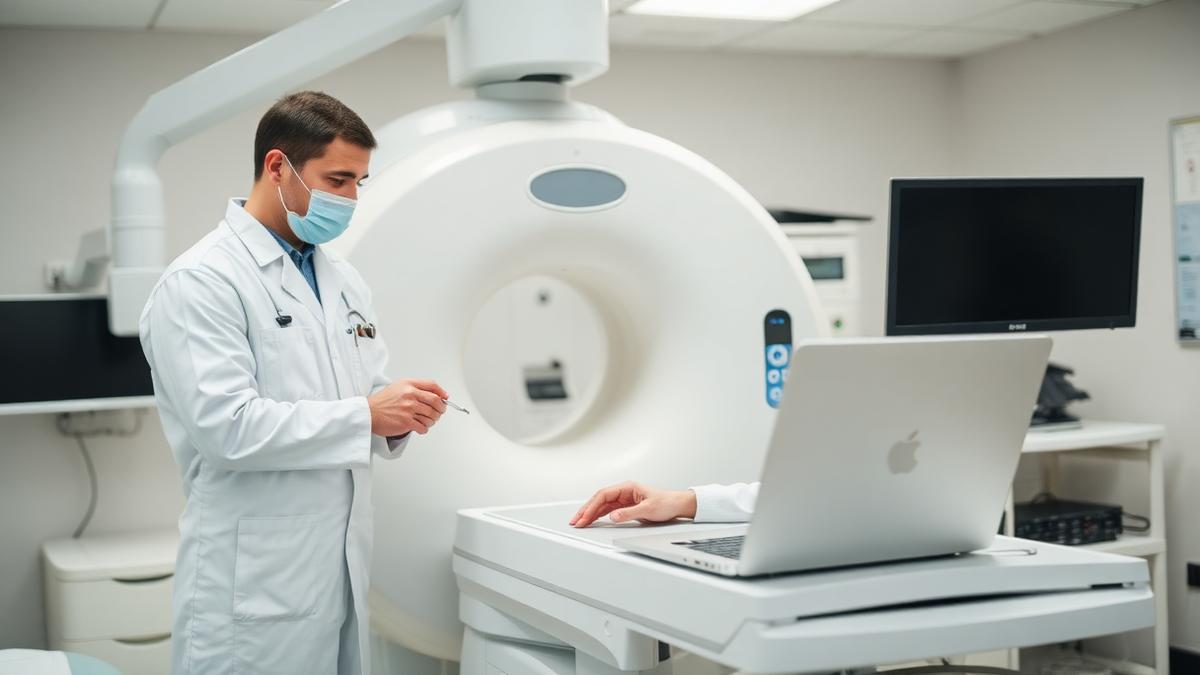
Biomedical engineer performing preventive maintenance on medical imaging equipment
    ← Back to Blog|Service Guide

    Medical Imaging Equipment Maintenance — The Ultimate Guide

    March 13, 202619 min read

    Medical imaging equipment maintenance is one of the largest operational expenses for hospitals. This comprehensive guide covers preventive maintenance strategies, cost optimization, service provider selection, and modality-specific maintenance requirements for MRI, CT, cath lab, X-ray, and C-arm systems.

    Why Imaging Equipment Maintenance Matters

    Medical imaging equipment maintenance is not optional — it's a critical operational requirement that directly impacts patient care, diagnostic quality, regulatory compliance, and hospital finances. The World Health Organization (WHO) estimates that 40–60% of medical equipment in developing countries is non-functional, largely due to inadequate maintenance.

    Proper maintenance delivers four essential outcomes: patient safety (ensuring equipment performs within safety specifications), diagnostic accuracy (maintaining image quality for reliable diagnoses), regulatory compliance (meeting requirements for radiation safety, electrical safety, and quality assurance), and financial optimization (maximizing equipment lifespan and minimizing emergency repair costs).

    This guide provides a comprehensive framework for imaging equipment maintenance — covering every major modality, maintenance strategies, cost management, and provider selection criteria. Whether you're managing a single X-ray unit or a full imaging department with MRI, CT, cath lab, and X-ray systems, these principles apply.

    Preventive vs Reactive Maintenance

    Preventive Maintenance (PM) is scheduled, proactive maintenance performed at regular intervals regardless of whether equipment shows symptoms of failure. PM includes: calibration, inspection, component replacement based on usage metrics, cleaning, software updates, and safety testing. PM costs more upfront but saves 3–5x in avoided emergency repairs.

    Reactive Maintenance is responding to equipment failures as they occur. While unavoidable for unexpected failures, relying primarily on reactive maintenance leads to: longer downtime (waiting for parts and engineer availability), higher repair costs (emergency pricing and expedited shipping), cascading failures (one failed component damaging others), and unpredictable budget impact.

    Best Practice: 80/20 approach — 80% of maintenance budget on preventive programs, 20% reserved for unavoidable emergency repairs. Elesonic's service contracts are structured around comprehensive PM programs with emergency support as backup — not the other way around.

    MRI Maintenance Requirements

    MRI systems are the most complex and expensive imaging equipment to maintain. Key maintenance areas: Cryogenic System — monitor helium levels (monthly minimum), cold head performance tracking, compressor maintenance, and quench pipe integrity verification. Helium management is critical — a quench event costs $15,000–$30,000 to recover. Gradient System — quarterly calibration, amplifier performance monitoring, and coil integrity testing. Gradient failures are expensive ($30,000–$80,000).

    RF Coils — regular performance testing, connector inspection, and usage-based replacement planning. Coils cost $5,000–$40,000 each. Software — regular updates for clinical applications, system firmware, and security patches. Mechanical Systems — patient table operation, bore lighting, ventilation system, and intercom functionality. Annual service costs: OEM $150,000–$350,000, third-party (Elesonic) $90,000–$200,000.

    CT Scanner Maintenance Requirements

    CT maintenance centers on the X-ray tube as the primary consumable: Tube Management — continuous monitoring of tube heat capacity, scan count tracking, and proactive replacement planning. Tube replacement costs $60,000–$150,000. Detector Calibration — monthly air calibrations, quarterly detector element testing, and annual comprehensive calibration. Detector repairs cost $20,000–$80,000.

    Gantry System — bearing inspection, slip ring maintenance (for continuous rotation systems), and alignment verification. Cooling System — chillers, fans, and heat exchangers require regular maintenance — especially in tropical climates. Power System — high-voltage generator calibration, inverter testing, and UPS battery verification. Annual service costs: OEM $60,000–$220,000, third-party (Elesonic) $40,000–$140,000.

    Cath Lab, X-Ray, and C-Arm Maintenance

    Cath Lab — the most mission-critical imaging system. Maintenance priorities: flat-panel detector calibration (monthly), C-arm movement and braking systems (quarterly), high-power tube monitoring (continuous), table hydraulics and positioning (quarterly), and hemodynamic system integration. Annual service: OEM $200,000–$400,000, third-party $110,000–$260,000.

    X-Ray — the most widely deployed modality with relatively simpler maintenance: tube output verification (semi-annual), generator calibration (annual), table and bucky mechanism inspection (quarterly), DR panel calibration (quarterly for digital systems), and radiation safety testing (annual). Annual service: OEM $5,000–$45,000, third-party $3,000–$30,000.

    C-Arm — mobile systems with unique maintenance needs: image chain maintenance (II reconditioning or FPD calibration), mechanical system (C-arm movement, brakes, wheels, counterbalance), X-ray tube monitoring, display calibration, and DICOM connectivity verification. Annual service: OEM $8,000–$40,000, third-party $5,000–$25,000.

    Building a Maintenance Program

    Step 1: Equipment Inventory — document every imaging system including manufacturer, model, serial number, installation date, and current service status. Step 2: Risk Assessment — prioritize equipment by clinical impact of failure (cath lab > MRI > CT > X-ray). Step 3: Service Model Selection — determine OEM vs third-party for each system based on age, warranty status, and budget.

    Step 4: Contract Negotiation — define SLAs (response times, uptime guarantees), parts coverage, PM schedules, and pricing. Get competitive quotes from both OEM and third-party providers. Step 5: Implementation — schedule PM visits, establish remote monitoring, train local staff on daily operational checks, and create emergency response protocols.

    Step 6: Continuous Improvement — track KPIs (uptime percentage, mean time to repair, PM compliance, total cost per modality) and adjust strategies based on data. Elesonic provides consultation and implementation support for hospitals building or optimizing their imaging maintenance programs.

    Choosing a Maintenance Provider

    The right maintenance provider can reduce costs by 30–40% while maintaining or improving equipment uptime. Selection criteria: technical expertise — verified experience on your specific equipment models, certifications (CE, ISO 13485), and factory-trained engineers. Regional presence — local engineers and parts inventory for fast response. Pricing model — contracts priced appropriately for your market economics.

    Multi-vendor capability — one provider covering all your imaging equipment simplifies management and often reduces total cost through bundling. Track record — verified references from hospitals in your region with similar equipment. Communication — clear reporting, transparent pricing, and responsive account management.

    Elesonic Group delivers on all criteria: CE and ISO 13485 certified, multi-vendor expertise across MRI, CT, cath lab, X-ray, and C-arm from all major manufacturers, regional presence in Africa/India/Caribbean, pricing designed for developing markets, and a proven track record of hospital partnerships across three continents.

    Frequently Asked Questions

    How often should medical imaging equipment be serviced?

    Recommended PM frequencies: MRI — quarterly on-site visits with monthly remote monitoring. CT — quarterly PM with continuous tube monitoring. Cath Lab — quarterly PM with monthly FPD checks. X-ray — semi-annual PM minimum. C-arm — quarterly to semi-annual depending on usage volume. All should include 24/7 emergency remote support.

    What is preventive maintenance for imaging equipment?

    Preventive maintenance (PM) is scheduled, proactive maintenance performed at regular intervals: calibration, inspection, component replacement based on usage data, cleaning, software updates, safety testing, and documentation. PM costs more upfront but saves 3–5x in avoided emergency repairs and extends equipment lifespan.

    How much does imaging equipment maintenance cost?

    Annual maintenance costs by modality: MRI — $90K–$350K, CT — $40K–$220K, Cath Lab — $110K–$400K, X-ray — $3K–$45K, C-arm — $5K–$40K. Third-party providers like Elesonic offer 30–40% savings vs OEM on all modalities.

    What is the most expensive imaging equipment to maintain?

    By annual cost: (1) Cath Labs — $110K–$400K/year, (2) MRI 3.0T — $130K–$350K, (3) MRI 1.5T — $90K–$250K, (4) CT 128-slice — $90K–$220K, (5) CT 64-slice — $65K–$160K, (6) C-arm FPD — $15K–$40K, (7) X-ray DR — $15K–$45K, (8) X-ray analog — $3K–$12K.

    What does an imaging equipment service contract include?

    Comprehensive contracts include: scheduled PM visits (quarterly+), 24/7 emergency remote support, on-site emergency repairs within defined SLAs, parts coverage (included or capped), software updates, quality assurance testing, regulatory compliance support, and documentation/reporting.

    Should I use OEM or third-party imaging service?

    OEM service: higher cost but guaranteed manufacturer parts and software access. Best for: equipment under warranty, newest systems. Third-party service: 30–40% cost savings with equivalent quality from qualified providers. Best for: systems 3+ years old, multi-vendor environments, budget-constrained facilities. Elesonic is a leading third-party option.

    How does preventive maintenance save money?

    Every $1 spent on PM saves $3–$5 in emergency repairs. PM prevents: unplanned downtime (lost revenue), cascading component failures (one failure causing others), expedited parts shipping costs, and emergency labor premiums. PM also extends equipment lifespan and maintains resale value.

    What training do hospital staff need for imaging equipment?

    Staff training levels: daily operational checks (technologists — 1–2 hours training), basic troubleshooting (biomedical engineers — manufacturer-specific training), safety procedures (all staff — radiation and electrical safety), and quality assurance testing (physics/QA staff — regulatory requirements). Elesonic includes staff training in service contracts.

    How does remote diagnostics work for imaging equipment?

    Remote diagnostics connects imaging equipment to the service provider's monitoring center via secure internet connection. Engineers can: monitor system parameters in real-time, receive automatic alerts for abnormal conditions, diagnose many problems remotely, and sometimes apply fixes without an on-site visit. Elesonic provides 24-hour remote diagnostic support for all service contracts.

    What KPIs should I track for imaging equipment maintenance?

    Essential KPIs: equipment uptime percentage (target: >95%), mean time to repair (MTTR), PM compliance rate (target: 100%), unplanned downtime events per quarter, total maintenance cost per modality, cost per scan (maintenance component), and parts consumption rate. These metrics guide optimization decisions.

    How does climate affect imaging equipment maintenance in Africa?

    Tropical climate impacts: heat stresses cooling systems (MRI cryogenics, CT chillers), humidity causes condensation on electronics, dust infiltration accelerates wear on mechanical components, and extreme temperatures reduce equipment lifespan. Mitigation: enhanced HVAC, proper sealing, more frequent PM visits, and air filtration. Elesonic's Africa-specific service programs account for these factors.

    What is multi-vendor imaging service?

    Multi-vendor service means one provider services imaging equipment from all manufacturers (Siemens, GE, Philips, Toshiba, etc.). Benefits: simplified vendor management, bundled pricing discounts, coordinated maintenance scheduling, and single point of accountability. Elesonic provides multi-vendor service across all major imaging modalities.

    Can I do some imaging equipment maintenance in-house?

    Yes. Hospital biomedical teams can handle: daily operational checks, basic troubleshooting, environmental monitoring, simple calibrations, and first-line diagnostics. Complex maintenance (MRI cryogenics, CT tube replacement, cath lab FPD service) should be performed by qualified service providers. Elesonic trains hospital teams on appropriate in-house maintenance tasks.

    How long do imaging equipment service contracts last?

    Contracts typically run 1–3 years. Multi-year terms (2–3 years) provide: budget predictability, 10–15% additional discounts, and priority service status. Elesonic offers flexible terms including annual, multi-year, and per-call options. Avoid auto-renewal clauses that limit your ability to switch providers.

    What happens during an imaging equipment emergency repair?

    Emergency repair process: (1) Hospital contacts service provider, (2) Remote diagnostic session (within 4 hours at Elesonic), (3) Remote troubleshooting and repair attempt, (4) If on-site needed: engineer dispatched (48–72 hours for Elesonic in Africa), (5) On-site diagnosis and repair, (6) Testing and return to clinical service, (7) Root cause documentation and preventive recommendations.

    How do I budget for imaging equipment maintenance?

    Budget guideline: allocate 5–10% of equipment value annually for maintenance. Example: $2M MRI = $100K–$200K/year maintenance budget. Reduce this with: third-party service (save 30–40%), bundled contracts (save 10–20%), and strong PM programs (reduce emergency costs). Elesonic helps hospitals optimize maintenance budgets for their specific equipment mix.

    What is equipment lifecycle management?

    Equipment lifecycle management covers the entire ownership journey: procurement (new or refurbished), installation and commissioning, warranty period management, ongoing service and maintenance, performance optimization, technology refresh planning, and eventual decommission or trade-in. Elesonic provides integrated lifecycle management for all imaging modalities.

    Does Elesonic provide imaging maintenance in the Caribbean?

    Yes. Elesonic has active imaging equipment service operations across the Caribbean including Jamaica, Trinidad & Tobago, and Barbados. Services cover MRI, CT, cath lab, X-ray, and C-arm equipment from all major manufacturers with local support teams and India-based engineering backup.

    What regulatory requirements apply to imaging equipment maintenance?

    Requirements vary by country but commonly include: annual radiation safety testing (for X-ray based equipment), electrical safety testing, quality assurance protocols, calibration documentation, and maintenance records. Service providers should help ensure regulatory compliance. Elesonic's service programs include regulatory compliance support as standard.

    How does power quality affect imaging equipment?

    Poor power quality (voltage fluctuations, frequency variations, outages) is a leading cause of equipment failure in developing markets. Impact: premature component failure, calibration drift, data corruption, and MRI quench events. Solutions: dedicated UPS systems, voltage regulators, surge protection, and generator backup. Elesonic includes power quality assessment in equipment installations.

    Ready to Reduce Your Service Costs?

    Get a customized service proposal for your imaging equipment — MRI, CT, cath lab, X-ray, or C-arm.