
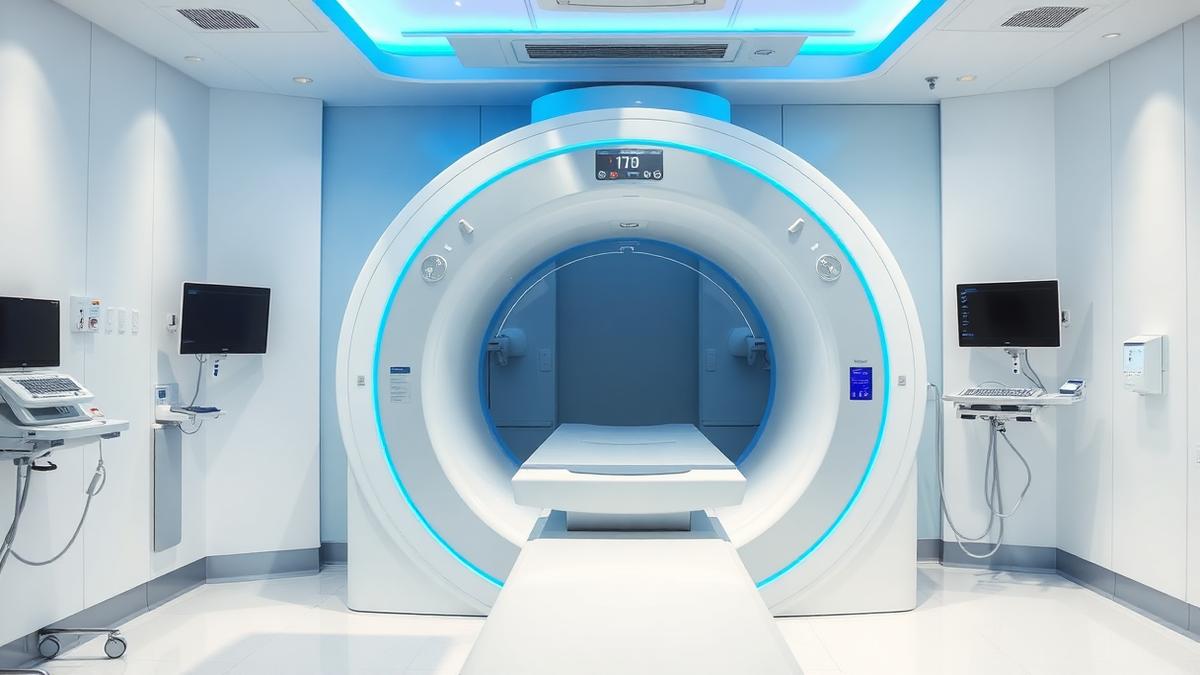
Planning to buy a CT scanner? This comprehensive guide covers everything from 16-slice to 128-slice configurations, comparing new versus refurbished options, manufacturers, installation requirements, and service strategies to help you make the most informed decision.
Understanding CT Scanner Technology in 2026
Computed Tomography (CT) scanners remain the workhorse of modern diagnostic imaging. According to the Radiological Society of North America (RSNA), CT is the most frequently used advanced imaging modality, with applications spanning emergency medicine, oncology, cardiology, neurology, and interventional procedures.
CT technology continues to evolve with photon-counting detectors, AI-powered reconstruction, and spectral imaging capabilities in the latest generation systems. However, for hospitals in developing markets, the fundamental question remains: what slice count and configuration delivers the best clinical value at a manageable cost?
This guide provides a systematic framework for CT scanner selection, covering the technical specifications that matter, cost implications of different configurations, and practical considerations for installation and ongoing operation in developing market environments.
CT Scanner Slice Count: What Do You Actually Need?
The 'slice count' indicates how many detector rows the CT has, which determines scan speed, resolution, and clinical applications. Here's what each tier offers: 16-slice CT — adequate for routine body imaging, emergency, and outpatient diagnostics. Scan times are acceptable for non-cardiac, non-angio applications. Best value option for general-purpose use. 32-slice CT — a step up in speed and resolution, with improved multiplanar reconstruction quality. Good middle ground for busy departments.
64-slice CT — the clinical sweet spot for most hospitals. Capable of cardiac CT, CT angiography (CTA), trauma protocols, and high-resolution body imaging. Fast enough for virtually all routine diagnostic applications. 128-slice CT — premium tier offering the fastest scan speeds, highest resolution, and advanced capabilities like spectral imaging. Justified for high-volume centers, dedicated cardiac imaging, or research applications.
For developing market hospitals, 64-slice CT offers the optimal balance of clinical capability and cost. It handles all routine diagnostics while enabling cardiac CT and CT angiography — procedures that generate significant revenue. 16-slice is a good entry point for facilities with tighter budgets or lower patient volumes.
CT Scanner Cost Comparison: New vs Refurbished
The cost differential between new and refurbished CT scanners is substantial: 16-slice — New: $200,000–$500,000, Refurbished: $80,000–$180,000. 32-slice — New: $350,000–$700,000, Refurbished: $120,000–$250,000. 64-slice — New: $500,000–$1,200,000, Refurbished: $150,000–$400,000. 128-slice — New: $800,000–$2,000,000, Refurbished: $300,000–$700,000.
These savings of 50–70% make refurbished CT scanners the practical choice for most developing market hospitals. A quality refurbished 64-slice CT at $200,000–$350,000 delivers the same diagnostic capability as a new system costing $500,000–$1,000,000+.
Total cost of ownership is the complete picture. Over 5 years, a refurbished 64-slice CT with third-party service from Elesonic costs approximately $550,000–$850,000 total (acquisition + installation + 5 years service). A new equivalent with OEM service costs approximately $1,200,000–$2,200,000. The savings fund additional equipment, facility improvements, or operational reserves.
Major CT Scanner Manufacturers
Siemens Healthineers (Somatom Series) — The Somatom line includes Force (dual-source 128-slice), Definition (128/64-slice), and Emotion (16-slice). Known for: excellent image reconstruction algorithms, dual-energy CT capability, and robust build quality. Popular refurbished models: Somatom Emotion 16, Somatom Definition AS 64/128.
GE HealthCare (Revolution Series) — The Revolution line spans from entry-level (Revolution ACTs) to premium (Revolution Apex). Known for: strong detector technology, deep learning reconstruction (TrueFidelity), and wide-bore design. Popular refurbished models: BrightSpeed 16, Optima 660 64-slice, Revolution EVO.
Philips Healthcare (Incisive/Brilliance Series) — The latest Incisive CT platform and legacy Brilliance series cover all tiers. Known for: spectral imaging (iQon), dose optimization technology, and user-friendly interface. Popular refurbished models: Brilliance 16/64, Ingenuity Core 128. Toshiba/Canon (Aquilion Series) — The Aquilion line is known for: wide-area detector technology, excellent cardiac imaging, and long-lasting tube technology.
CT Scanner Installation Requirements
CT installation requires careful site preparation: room dimensions — minimum 20–25 square meters for the scan room, plus control room (10–15 sqm) and equipment room (8–12 sqm). Structural considerations — the CT gantry and patient table weigh 1,500–3,000 kg, requiring adequate floor load capacity. Electrical — dedicated 3-phase power supply, typically 80–100 kVA. HVAC — the CT generates significant heat, requiring dedicated cooling with 10–20 kW capacity.
Radiation shielding — walls, door, and viewing window must provide adequate shielding (typically 1.5–2mm lead equivalent, depending on local regulations and scan volume). For developing markets, additional considerations include: power conditioning (voltage regulators, UPS), enhanced cooling for tropical climates, and logistics planning for gantry delivery (may require crane access).
Elesonic provides complete CT installation services including site planning, construction guidance, equipment delivery, installation, calibration, dose protocol setup, and clinical application training. Our developing market experience includes navigating the specific infrastructure and logistics challenges of Africa, India, and the Caribbean.
X-Ray Tube: The Critical Component
The X-ray tube is the most expensive consumable component in a CT scanner, costing $60,000–$150,000 for replacement. Tube lifespan depends on: scan volume (high-trauma centers consume tubes faster), scanning protocols (high-mA protocols accelerate wear), and tube technology (higher heat capacity tubes last longer).
Tube management strategy is essential for cost control: monitor tube life metrics continuously (most modern CTs provide tube heat unit counters), plan tube replacements proactively (avoiding emergency replacement premiums), consider refurbished tubes ($30,000–$70,000 vs $60,000–$150,000 for new), and ensure your service provider includes tube monitoring in their PM program.
Elesonic's CT service contracts include proactive tube monitoring and lifecycle management, helping hospitals plan and budget for tube replacements while maximizing tube lifespan through proper protocol optimization.
Service Strategy for CT Scanners
OEM CT service contracts cost $60,000–$220,000/year depending on slice count. Third-party alternatives from providers like Elesonic offer 30–40% savings: 16-slice — $40,000–$65,000/year (vs OEM $60,000–$100,000). 64-slice — $65,000–$100,000/year (vs OEM $100,000–$160,000). 128-slice — $90,000–$140,000/year (vs OEM $140,000–$220,000).
Key service contract considerations: tube coverage — is tube replacement included or capped? Inclusion adds $20,000–$40,000/year to contract cost but provides budget certainty. Response time — SLAs should specify maximum downtime. For busy departments, 4-hour remote + 24-hour on-site targets are standard. Parts inclusion — contracts may include all parts, cap parts costs, or exclude high-value components. Understand what's included before signing.
Elesonic's CT service contracts offer flexible configurations — from basic PM-only to fully comprehensive (including tube coverage) — allowing hospitals to match their risk tolerance and budget constraints.