
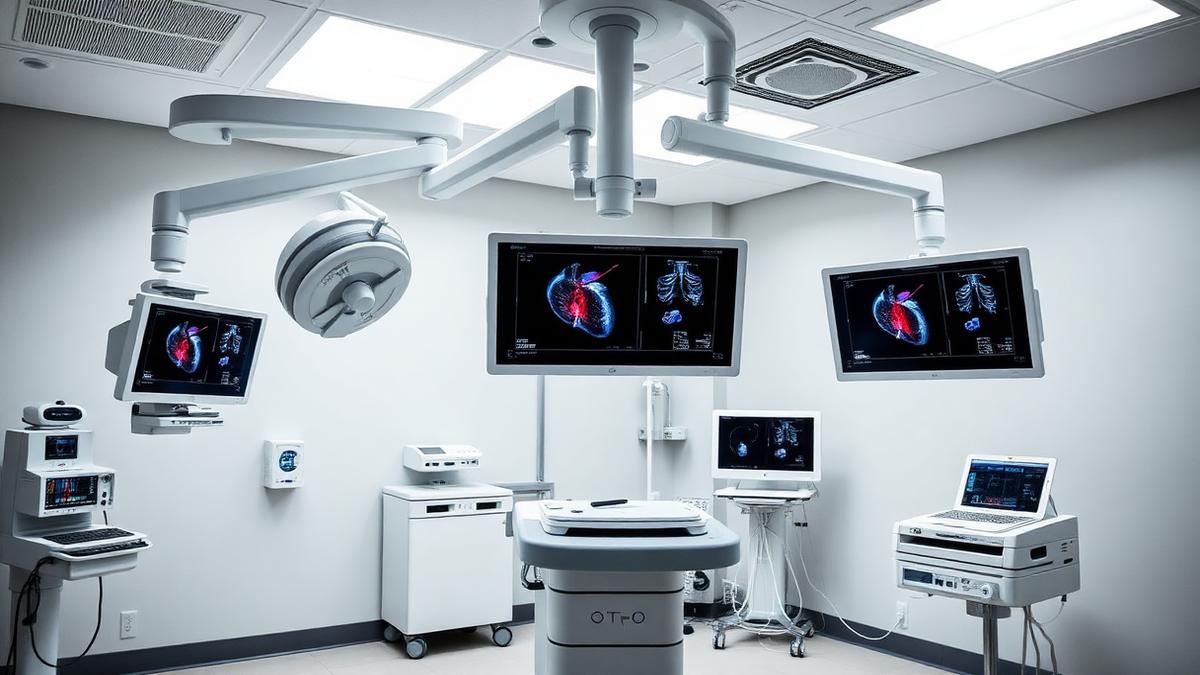
Modern cardiac catheterization lab with interventional equipment and monitors
    ← Back to Blog|Equipment Guide

    Complete Guide to Cath Lab Equipment — Cost, Features, and Selection

    March 17, 202620 min read

    Planning a cardiac catheterization lab? This comprehensive guide covers everything from equipment selection and manufacturer comparison to installation requirements, costs, and ongoing service — with specific guidance for hospitals in developing markets.

    What Is a Cath Lab and Why Does It Matter?

    A cardiac catheterization laboratory (cath lab) is a specialized medical facility equipped with fluoroscopy and hemodynamic monitoring systems used for minimally invasive cardiovascular procedures. According to the American Heart Association (AHA), cath labs perform diagnostic cardiac catheterizations, percutaneous coronary interventions (PCI/angioplasty), structural heart procedures, and electrophysiology studies.

    For hospitals in developing markets, establishing a cath lab represents a transformative capability — bringing interventional cardiology to populations that would otherwise need to travel hundreds of kilometers for cardiac care. The WHO estimates cardiovascular disease causes 17.9 million deaths annually, with over 80% occurring in low- and middle-income countries where cath lab access is most limited.

    This guide provides a complete roadmap for hospitals planning to establish or upgrade a cardiac catheterization lab — covering equipment selection, manufacturer comparison, configuration options, installation requirements, costs, and ongoing service strategies.

    Major Cath Lab Equipment Manufacturers

    Three manufacturers dominate the cath lab market: Siemens Healthineers with their Artis line (Artis Zee, Artis Q, Artis Pheno, and the latest Artis icono), Philips Healthcare with the Azurion platform (successor to Allura FD series), and GE HealthCare with Discovery IGS and Innova systems.

    Each manufacturer offers distinct advantages: Siemens Artis — known for excellent image quality, robust mechanical systems, and strong clinical application support. Philips Azurion — praised for intuitive user interface, workflow automation, and dose management features. GE Discovery IGS — valued for detector technology, flexible positioning, and integration with GE's broader imaging ecosystem.

    For developing market hospitals, the choice often comes down to: local service availability (which OEM has presence in your country), parts accessibility, and whether you're buying new or refurbished (where model availability varies by manufacturer and generation).

    Cath Lab Cost Breakdown

    New Cath Lab Costs: Single-plane system: $1.0–$2.0M. Biplane system: $2.0–$4.0M. These prices include the core equipment (C-arm, flat-panel detector, patient table, generators, imaging chain) but may not include room construction, hemodynamic monitoring, and ancillary equipment.

    Refurbished Cath Lab Costs: Single-plane: $250,000–$600,000. Biplane: $400,000–$1.2M. Refurbished systems offer 50–75% savings while delivering equivalent clinical capability for the core diagnostic and interventional procedures performed in developing market settings.

    Additional costs to budget: Room construction/preparation — $100,000–$300,000 (radiation shielding, HVAC, electrical). Hemodynamic monitoring system — $50,000–$150,000. Injector system — $30,000–$80,000. PACS integration — $20,000–$50,000. Installation and commissioning — $50,000–$150,000. Annual service contract — $110,000–$400,000/year.

    Single-Plane vs Biplane: Which Do You Need?

    Single-plane cath labs use one C-arm and flat-panel detector, providing fluoroscopic imaging from one angle at a time. They are suitable for: diagnostic cardiac catheterization, coronary interventions (PCI), peripheral vascular procedures, and basic structural heart interventions.

    Biplane cath labs use two C-arms (frontal and lateral) providing simultaneous dual-angle imaging. They are essential for: complex structural heart procedures (TAVR, mitral valve repair), neurointerventional procedures, pediatric cardiology (where radiation dose reduction from fewer acquisitions is critical), and high-volume centers performing complex interventions.

    For most developing market hospitals establishing their first cath lab, a single-plane system provides the diagnostic and interventional capability needed for 80–90% of cardiac catheterization procedures. Biplane should be considered for facilities planning to offer neurointerventional services or expecting very high-volume complex cardiac procedures.

    Installation and Room Design

    Cath lab installation requires careful planning and specialized construction. Key requirements include: radiation shielding — walls, ceiling, and floor must incorporate lead or equivalent shielding to protect staff in adjacent areas. Room dimensions — minimum 30–40 square meters for single-plane, 40–55 square meters for biplane. HVAC — medical-grade air handling with positive pressure and temperature control. Electrical — dedicated power supply with UPS backup (critical during procedures).

    Additional infrastructure: control room with lead-glass viewing window, scrub area and patient preparation space, equipment room for generators and cooling systems, and storage for catheters, stents, and consumables. For tropical climates common in Africa and the Caribbean, enhanced cooling capacity is essential.

    Elesonic provides complete cath lab installation services including room design consultation, construction oversight, equipment installation, calibration, commissioning, and clinical application training. Our experience with installations in Africa and India includes navigating the specific logistical and regulatory challenges of these markets.

    Flat-Panel Detector Technology

    The flat-panel detector (FPD) is the most critical and expensive component of a modern cath lab. FPDs have replaced image intensifiers in current-generation cath labs, providing: higher spatial resolution, wider field of view, lower radiation dose, distortion-free imaging, and compatibility with advanced imaging features like 3D rotational angiography.

    FPD sizes vary by application: 20cm x 20cm (8-inch) — compact detectors for coronary work. 25cm x 25cm (10-inch) — versatile size for most cardiac procedures. 30cm x 30cm (12-inch) — large format for peripheral vascular and abdominal work. Biplane systems typically use one large and one compact detector.

    FPD replacement is the most expensive cath lab repair — $80,000–$200,000 for a new detector. Elesonic's ability to repair and recalibrate flat-panel detectors at 40–60% of replacement cost represents one of the most significant cost-saving capabilities for cath lab operators.

    Service and Maintenance Strategy

    Cath lab service is the most expensive imaging maintenance category, with OEM contracts costing $200,000–$400,000/year. Given the mission-critical nature of cath labs (patient procedures cannot be interrupted), service reliability is paramount.

    Recommended service strategy: Year 1–2 — maintain manufacturer warranty or extended warranty. Year 3+ — transition to qualified third-party service for significant cost savings. Ongoing — implement comprehensive preventive maintenance program including quarterly PM visits, monthly FPD calibration checks, tube monitoring, and table/mechanical system inspection.

    Elesonic's cath lab service contracts provide: 24-hour remote diagnostic support, 48-72 hour on-site response for critical issues, quarterly preventive maintenance, FPD repair capability (avoiding $80K–$200K replacements), tube monitoring and management, and multi-vendor expertise across Siemens, Philips, and GE systems.

    Frequently Asked Questions

    How much does a cath lab cost?

    New cath labs cost $1.0–$2.0M for single-plane and $2.0–$4.0M for biplane systems. Refurbished cath labs cost $250,000–$600,000 (single-plane) and $400,000–$1.2M (biplane). Total project cost including room construction, ancillary equipment, and installation adds $200,000–$500,000.

    What equipment is needed for a cath lab?

    Essential cath lab equipment includes: fluoroscopy C-arm with flat-panel detector, patient table with hemodynamic compatibility, high-frequency X-ray generator, imaging workstation with archiving, hemodynamic monitoring system, contrast injector, and PACS connectivity. Ancillary equipment includes defibrillator, anesthesia cart, and consumable storage.

    What is the difference between single-plane and biplane cath lab?

    Single-plane uses one C-arm (one imaging angle at a time), suitable for most diagnostic and interventional cardiac procedures. Biplane uses two C-arms (simultaneous dual-angle imaging), essential for neurointerventional procedures, complex structural heart interventions, and pediatric cardiology. Most developing market hospitals start with single-plane.

    How long does cath lab installation take?

    Cath lab installation timeline: room construction/preparation — 3–6 months, equipment delivery — 2–4 weeks, installation and calibration — 2–4 weeks, commissioning and training — 1–2 weeks. Total project timeline from planning to clinical use: 4–8 months depending on room readiness and logistics.

    Which cath lab brand is best?

    The 'best' brand depends on your needs. Siemens Artis — excellent image quality and mechanical robustness. Philips Azurion — best user interface and workflow automation. GE Discovery IGS — strong detector technology and GE ecosystem integration. For developing markets, consider local service availability and refurbished system availability.

    How much does cath lab maintenance cost?

    OEM cath lab maintenance: $200,000–$400,000/year. Third-party (Elesonic): $110,000–$260,000/year (30–40% savings). The largest single maintenance expense is flat-panel detector replacement ($80K–$200K) — Elesonic's FPD repair capability reduces this cost by 40–60%.

    Can I buy a refurbished cath lab?

    Yes. Refurbished cath labs from CE-certified providers like Elesonic cost 50–75% less than new systems while delivering equivalent clinical capability. Popular refurbished models include Siemens Artis Zee, Philips Allura FD10/FD20, and GE Innova 2100/3100. All come with warranty and service support.

    What room size is needed for a cath lab?

    Minimum room sizes: single-plane cath lab — 30–40 square meters (approximately 320–430 sq ft). Biplane cath lab — 40–55 square meters (approximately 430–590 sq ft). Additional space needed for control room (15–20 sqm), equipment room (10–15 sqm), and patient preparation area.

    How much radiation shielding does a cath lab need?

    Cath lab radiation shielding requirements: walls — minimum 2mm lead equivalent (primary barriers may need more), ceiling and floor — shielding required if occupied spaces above/below, control room — lead-glass viewing window (2mm+ lead equivalent), and door — lead-lined. Exact requirements depend on local radiation safety regulations.

    What is a flat-panel detector in a cath lab?

    A flat-panel detector (FPD) is the digital imaging sensor in modern cath labs that captures X-ray images. FPDs have replaced older image intensifiers, providing: higher resolution, lower dose, distortion-free images, and wider field of view. They are the most expensive component to replace ($80K–$200K) but can be repaired by specialists like Elesonic at 40–60% less.

    How many procedures can a cath lab perform per day?

    A typical cath lab can perform 4–8 diagnostic catheterizations per day or 2–4 interventional procedures (PCI). Factors affecting throughput: procedure complexity, patient turnaround time, staffing levels, and equipment efficiency. High-volume centers may perform 1000–2000+ procedures annually.

    Does Elesonic install cath labs in Africa?

    Yes. Elesonic provides complete cath lab installation services across Africa including room design consultation, construction oversight, equipment delivery and installation, FPD calibration, system commissioning, and clinical application training. Active installations and service operations in Nigeria, Kenya, Uganda, and expanding across the continent.

    What training is needed for cath lab staff?

    Cath lab staff training includes: interventional cardiology fellowship for physicians, catheterization technologist certification for clinical staff, radiation safety training for all personnel, equipment operation training (provided by equipment supplier), and emergency procedure protocols. Elesonic includes clinical application training with all cath lab installations.

    What is the revenue potential of a cath lab?

    Cath lab revenue potential: diagnostic catheterization generates $1,000–$5,000 per procedure. PCI/stenting generates $5,000–$15,000+ per procedure. At 1000+ procedures/year, annual revenue can reach $1M–$5M+. ROI on a refurbished cath lab ($400K–$800K total investment) can be achieved within 1–3 years.

    Can a cath lab be used for non-cardiac procedures?

    Yes. Cath labs are increasingly used for: peripheral vascular interventions (angioplasty, stenting), neurointerventional procedures (biplane required), pain management procedures, dialysis access procedures, and tumor embolization. Multi-purpose use maximizes equipment utilization and ROI.

    What UPS system is needed for a cath lab?

    Cath labs require: online double-conversion UPS rated for the full system load (typically 30–60 kVA), minimum 10–15 minutes battery runtime (to safely complete a procedure during power outage), and automatic transfer switch to generator backup. Proper UPS is critical for patient safety during interventional procedures.

    How does Elesonic compare to OEM cath lab service?

    Elesonic provides equivalent cath lab service quality at 30–40% lower cost. Specific advantages include: FPD repair capability (saving $80K–$200K per incident), multi-vendor expertise (service Siemens, Philips, GE), regional presence in Africa and India (faster response), and pricing designed for developing market economics. CE and ISO 13485 certified.

    What are the ongoing consumable costs for a cath lab?

    Annual cath lab consumable costs: catheters and guidewires ($50,000–$200,000+), contrast media ($20,000–$50,000), stents ($500–$3,000+ each), balloons ($200–$800 each), sterile supplies ($20,000–$50,000), and medications ($10,000–$30,000). Consumable costs often exceed equipment service costs annually.

    What hemodynamic monitoring system is needed for a cath lab?

    Essential hemodynamic monitoring includes: multi-channel pressure monitoring (aortic, ventricular, atrial, pulmonary), ECG monitoring (12-lead), oxygen saturation measurement, cardiac output measurement, and data recording with reporting capability. Systems from Philips, GE, and specialized manufacturers cost $50,000–$150,000.

    How do I plan a cath lab for a developing market hospital?

    Planning steps: (1) Needs assessment — cardiovascular disease burden and procedure volume projections, (2) Site selection — room dimensions, structural capacity, utilities, (3) Equipment selection — new vs refurbished, single vs biplane, (4) Service planning — third-party contracts for cost optimization, (5) Staffing and training plan, (6) Financial model — ROI analysis based on procedure mix and pricing. Elesonic provides consultation for all steps.

    Ready to Reduce Your Service Costs?

    Get a customized service proposal for your imaging equipment — MRI, CT, cath lab, X-ray, or C-arm.